

The Best Turkish Coffee Shop
Mandabatmaz: The Foam That Even a Buffalo Can’t Sink

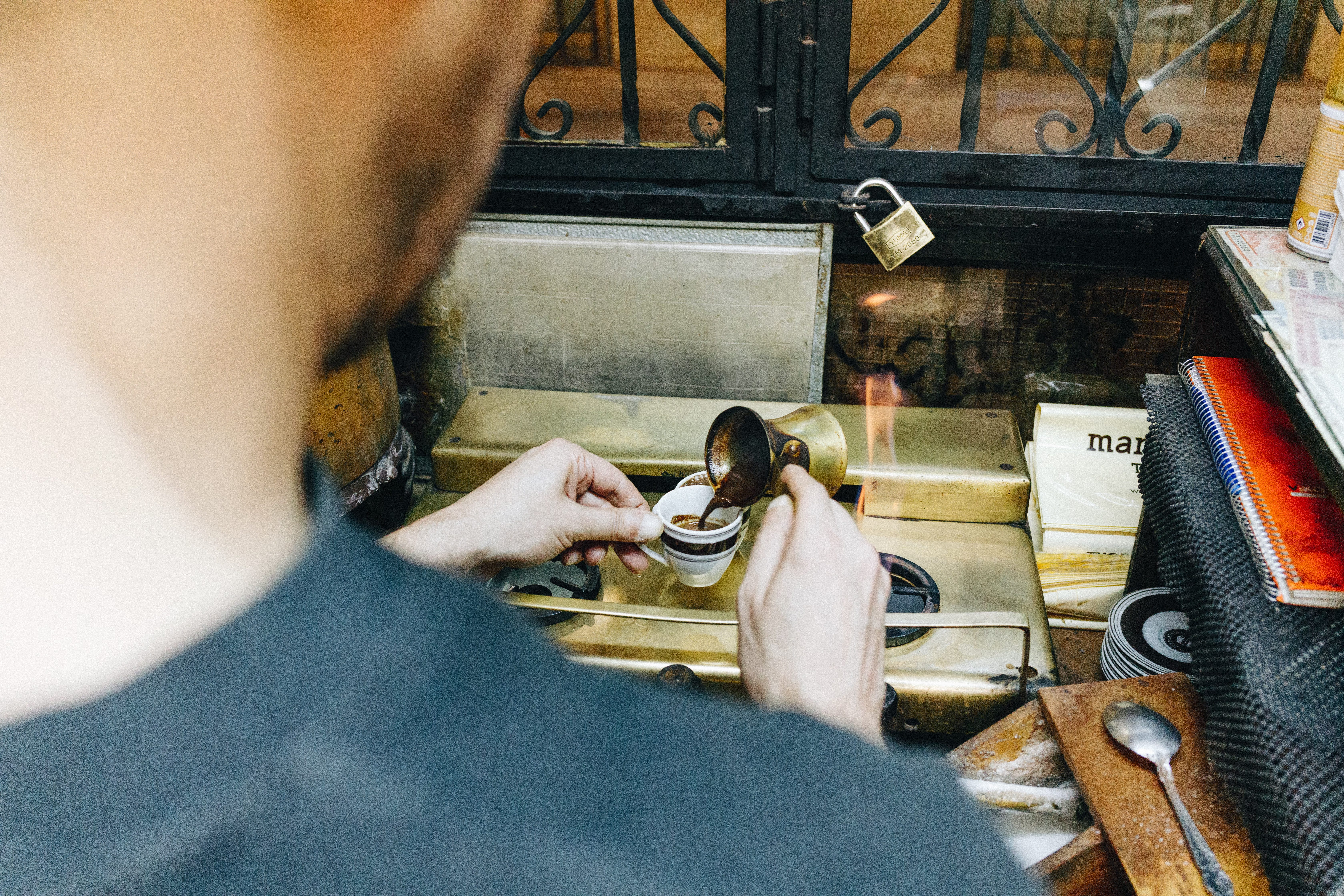
When searching for a place to sip Turkish coffee in Istanbul, Mandabatmaz is the destination. A small, hole-in-the-wall coffee shop tucked away off İstiklal Caddesi, Mandabatmaz has specialized in serving traditional Turkish coffee since 1967. Locals and tourists alike call it the best in the city.
Its name—Mandabatmaz, literally meaning “the buffalo doesn’t sink”—is a playful reference to the shop’s signature thick foam, said to be so dense that even a buffalo couldn’t sink through it.
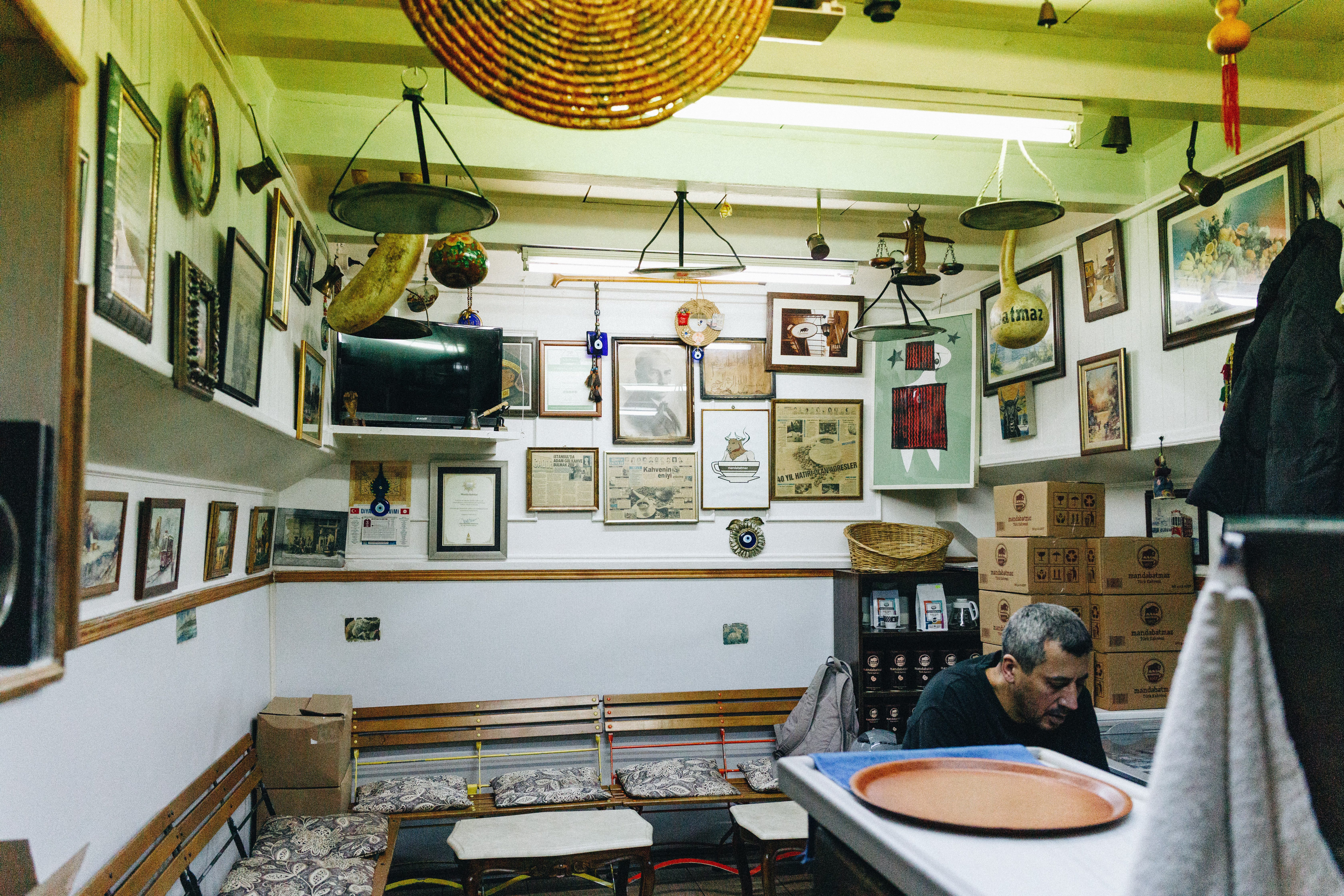
Down a narrow alleyway past a bustling restaurant, you’ll find Mandabatmaz’s handful of outdoor tables, each occupied by people savouring their prized cups of coffee. The tiny interior, lined with simple decor and the smell of freshly roasted beans, feels like an escape from the chaos of İstiklal: a place to pause amid shouting ice cream vendors, the honking Tramvay, and street musicians playing nearby.
One man I chatted with, cradling his small demitasse, told me he’s been coming here for years to meet a friend and share “a cup of Can”—my poor attempt at a Turkish twist on “a cup of Joe,” since Can (pronounced John) is such a common name here. He said he wouldn’t dream of ordering Turkish coffee anywhere else; it had become a ritual, a comfort.
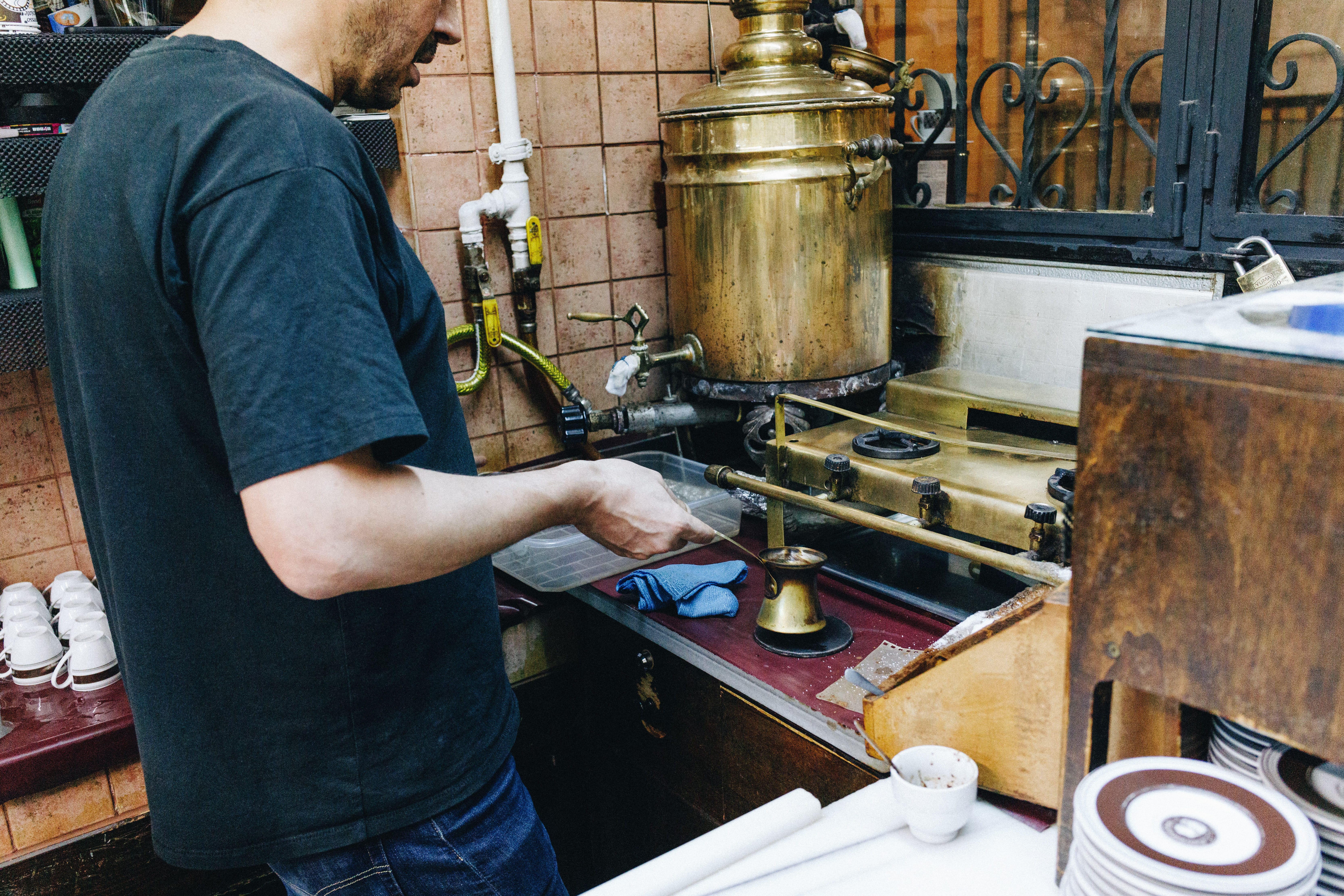
When Mandabatmaz first opened in 1967, instant coffee and modern cafes were rapidly gaining popularity. Turkish coffee had already been brewed and served for centuries, but new trends—espresso machines, cappuccinos, Western-style cafes—were beginning to take over. Mandabatmaz’s opening was almost an act of quiet resistance, a statement of preservation. Here, the coffee would still be made the traditional way: slowly, carefully, over an open flame.
Learning the Mandabatmaz Way
On a recent trip to Gaziantep, I bought a handcrafted cezve from Ahmet İnce, a master coppersmith in the city’s Bakırcılar Çarşısı (Coppersmiths’ Market). Eager to use it, I scoured the internet for recipes—but every method was slightly different. No matter what I tried, the result wasn’t quite right. My foam was thin—so fragile that, as I joked to myself, even an ant could fall through it.
That changed when I visited Mandabatmaz. There, I learned their method firsthand—and it transformed everything. That night, I went home and made my first real cup the Mandabatmaz way. The foam held beautifully, the flavor was deep and smooth, and there was none of the bitterness or astringency that had plagued my earlier attempts. It was strong, aromatic, and perfectly balanced.
Grab your cezve and join me in making the best Turkish coffee at home with this Mandabatmaz recipe:
Mandabatmaz Turkish Coffee Recipe
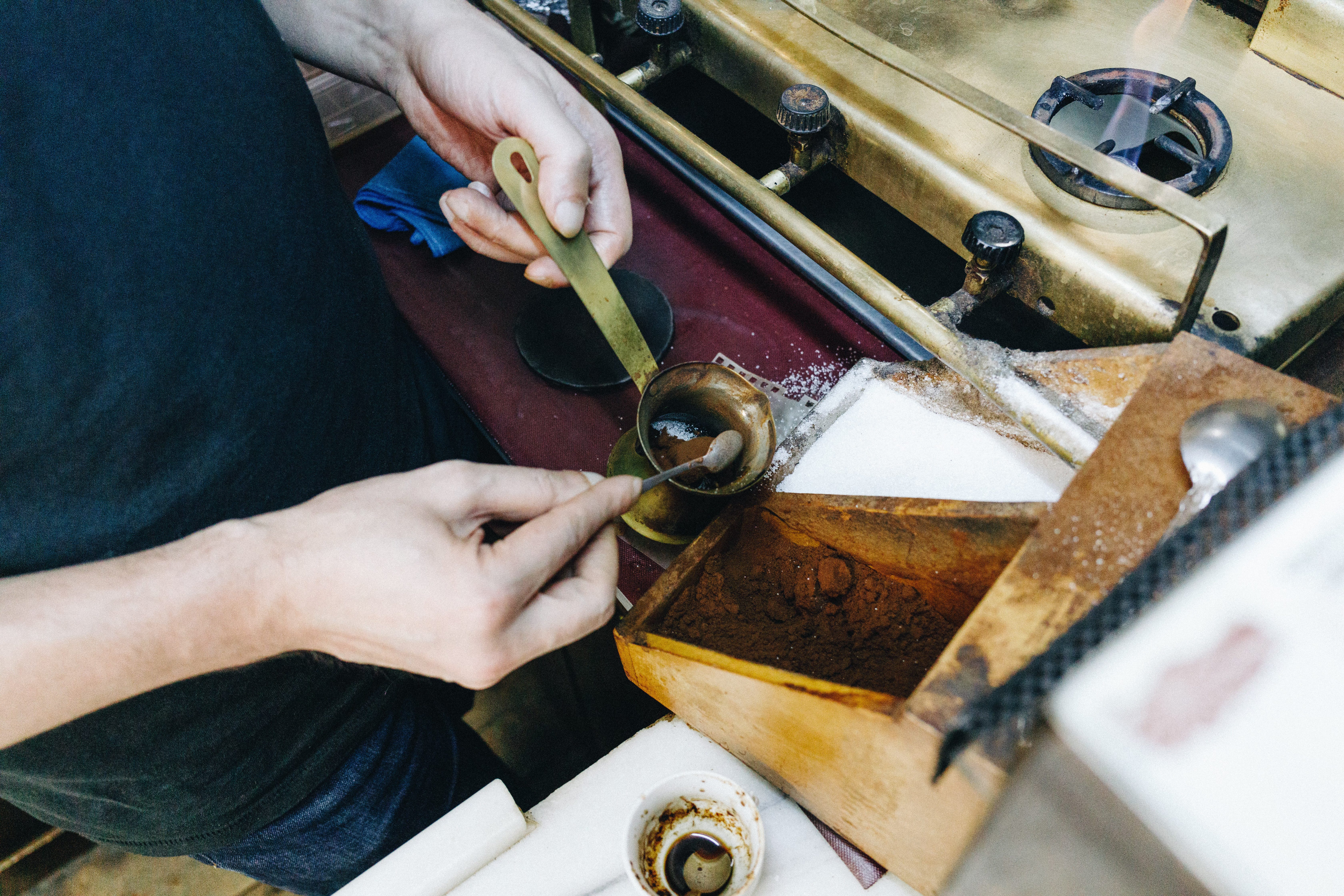
Serves 1 Turkish coffee cup
Ingredients
3 heaping teaspoons Turkish coffee grounds
Sugar, to taste (1 cube is my preference)
Hot water
Directions
Boil the water first.
The key to Mandabatmaz’s method is that they use hot, not cold, water—this helps eliminate the unwanted acidic taste from the grounds brewing too long.Prepare the cezve.
Add the coffee grounds and sugar directly into the cezve.Measure the water.
Fill your Turkish coffee cup (or a small 2-ounce shot glass) with hot water, then pour it into the cezve.Mix gently.
Stir to combine and allow the coffee to bloom.Heat on high.
Place the cezve over high heat (ideally a gas flame). As it begins to boil, watch the foam form around the edges and roll toward the center. When a small circle of foam appears in the middle—about the size of a coin—remove it from heat immediately.Pour and serve.
Pour the entire contents into your cup. Wait a few minutes for the grounds to settle.
Serve alongside a piece of Turkish delight or a small sweet, and enjoy one of the simplest yet most comforting rituals in Turkish culture.
Mandabatmaz isn’t just a place to drink coffee—it’s a reminder that tradition and craft still matter in a world that moves too fast. Watching the foam rise slowly in the cezve, you realize that this isn’t just about caffeine; it’s about patience, precision, and presence. Every cup served here carries decades of practice and pride, a quiet defiance against convenience.
Turkish coffee has been enjoyed since the Ottoman period—a drink quite literally brewed in history. If you ever find yourself in Istanbul, visit Mandabatmaz and experience a cup that has been passed down through empires and republics. In every sip, you help keep a centuries-old tradition alive.
Thanks for reading! If you enjoyed this article, I would love it if you’d buy me a coffee. I’d love to go back and get myself another Turkish coffee made by the masters themselves rather than one I make myself!
I'm usually an ant-foam man, too. I've gotta try this hot water method now and see if it changes my Turkish coffee game!